Cell Division Research
Decoding the Mechanisms ofCell Cycle Control
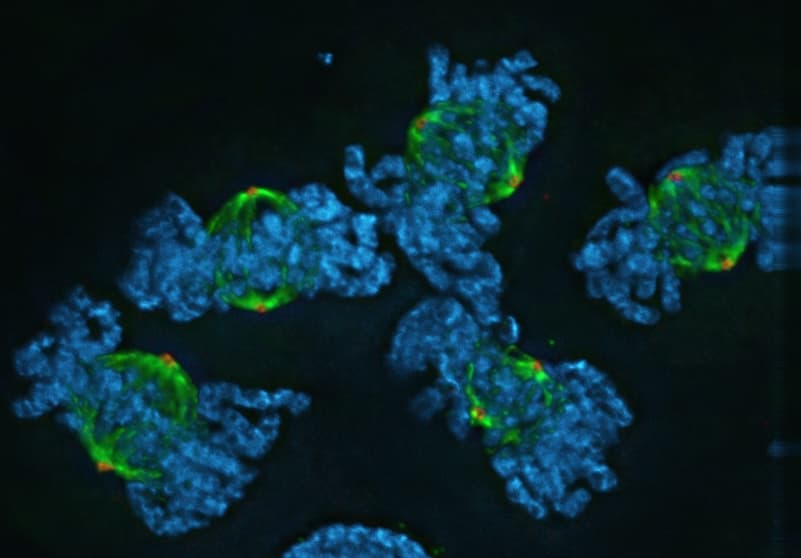
We are investigating how cells switch between interphase and mitosis. We explore basic cell cycle control mechanisms and potential applications in cancer therapy. As part of this process we are also developing new genetic, and computational tools to study cell cycle control.
Who We Are
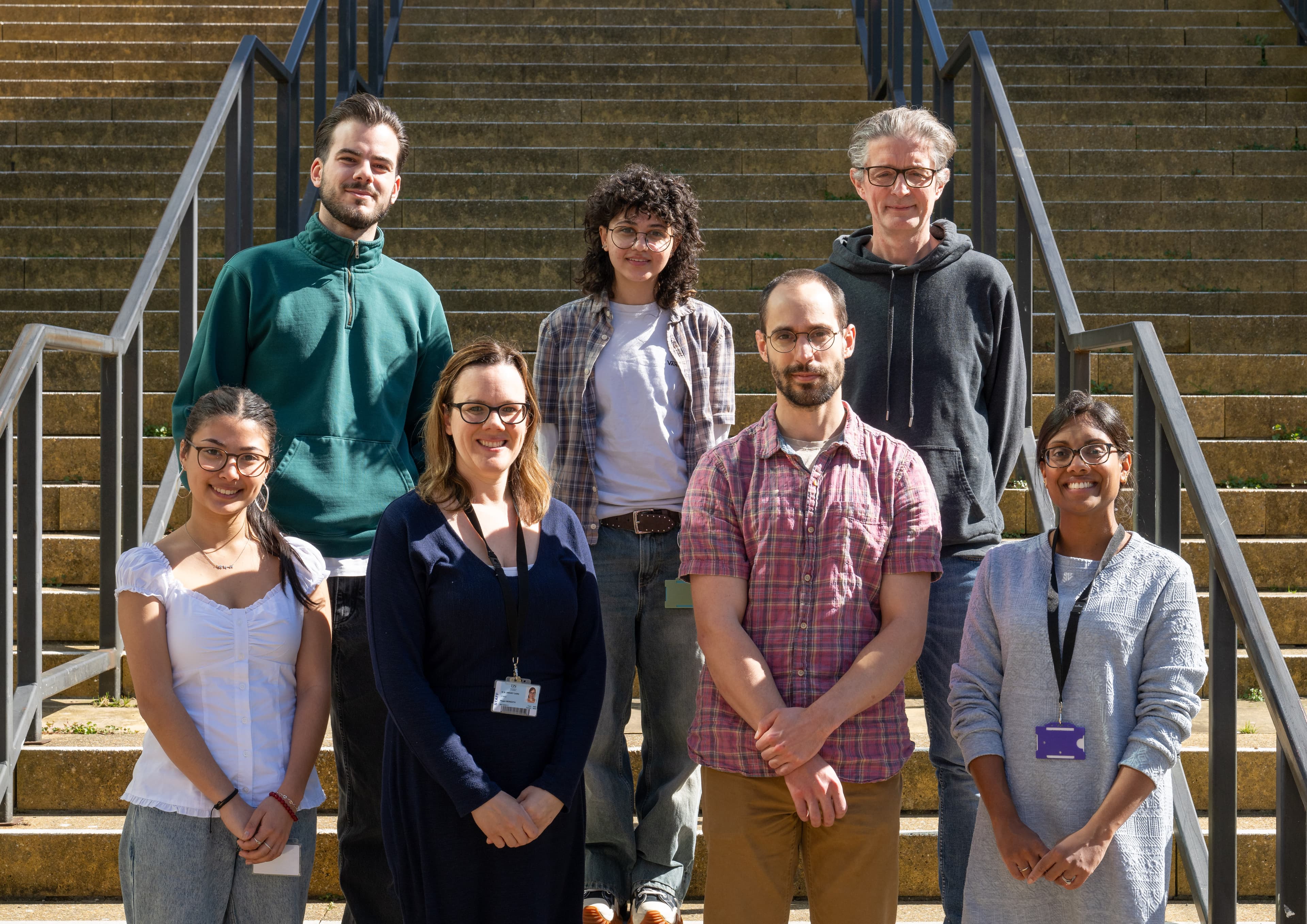
We are a group of experimental and computational cell biologists at the Genome Damage and Stability Centre, University of Sussex. We are passionate about understanding how cells divide and maintain genomic integrity. Our mission is to advance fundamental knowledge of cell cycle control while informing the development of targeted cancer therapies.
Contact Us
Genome Damage and Stability Centre
University of Sussex
Brighton BN1 9RQ
United Kingdom
Latest Projects
Our current research focuses on understanding cell cycle control mechanisms and their therapeutic implications
Greatwall Inhibition
translationalDeveloping small molecule inhibitors targeting the Greatwall kinase pathway to enhance cancer cell sensitivity to mitotic drugs. This project aims to identify novel therapeutic strategies for treatment-resistant tumors.
PI: Robert Zach
Exploring the dynamic regulation of mitotic entry
basicInvestigating the molecular crosstalk between Cdk1 and PP2A regulation in late G2 phase. We are exploring how this complex signalling module ensures that mitosis occurs at the right time and proceeds reliably.
PI: Sam Dias, Megan Meredith
OMERO-Screen
toolImplementing an advanced high-content screening platform using OMERO for automated analysis of cellcycle phenotypes. This infrastructure will accelerate our single cell analysis of mitotic entry.
PI: Helfrid Hochegger
Python for Biologists
teachingTeaching computational skills to life scientists through hands-on Python programming courses. We cover data analysis, visualization, and automation to empower biologists with modern computational tools.
PI: Helfrid Hochegger, Jo Renault
Lab News
Stay updated with the latest developments, publications, and team updates from our laboratory
Greatwall regulates leukaemia cell division through a non-canonical mechanism, now published in EMBO Reports
Our collaboration with Sandra Martin-Guerrero and Pedro Cutillas (now at the Instituto de Parasitología y Biomedicina López-Neyra, Granada) is out in EMBO Reports. AML cells need Greatwall kinase to proliferate, but not through its classic ENSA/ARPP19–PP2A-B55 pathway. Instead, Greatwall controls cytokinesis, partly by phosphorylating MARK3, which we identify as a new direct substrate.
View publicationSeptember 30, 2026DNAgent is now open for beta testing
DNAgent is our open-source DNA design and cloning workbench. It opens SnapGene and GenBank files, draws plasmid maps, simulates digests and Gibson assemblies, and designs primers. The desktop app and command-line tool share one Rust engine, so you and an AI agent can work on the same constructs. Try it and send feedback on GitHub.
View on GitHubOctober 9, 2026Rob's new preprint: Greatwall/PP2A-B55α shapes cancer cell dependence on PKMYT1
Rob's new bioRxiv preprint shows that in cancer cells, PP2A-B55α works with PKMYT1 to keep cells from entering mitosis too early. Shifting the Greatwall/PP2A-B55α balance makes cancer cells, but not normal cells, much more sensitive to the PKMYT1 inhibitor RP-6306. This points to a new way to target PKMYT1 in therapy.
View publicationSeptember 8, 2026